










































































































































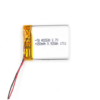
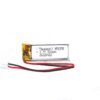

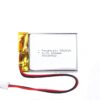
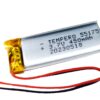
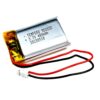

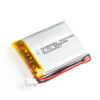

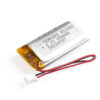
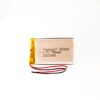


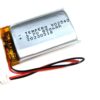

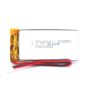

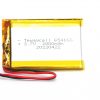
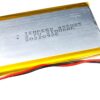
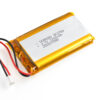
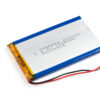

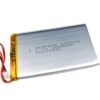

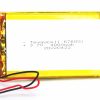
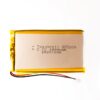


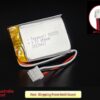

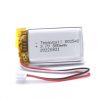
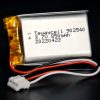
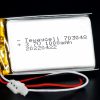
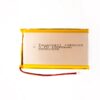
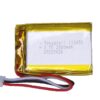
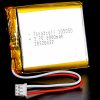
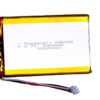
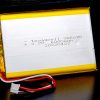
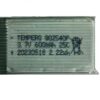
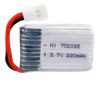
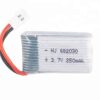
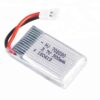
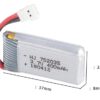
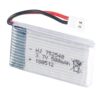

























































































702030 Lithium ion polymer Battery LiPo 3.7V 400mAh
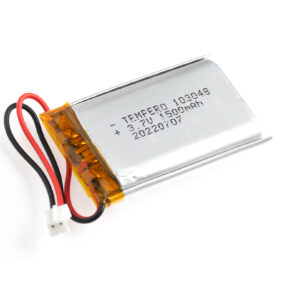
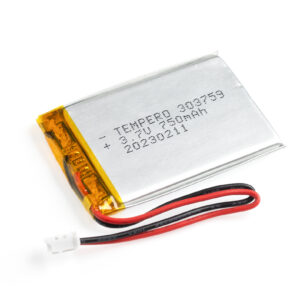
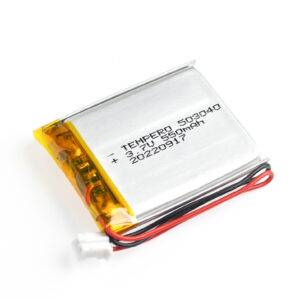
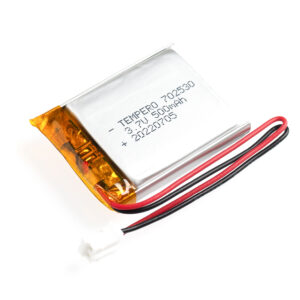
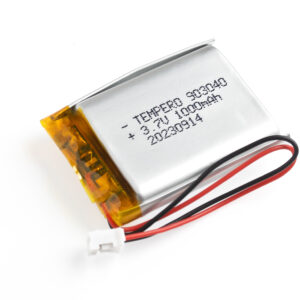
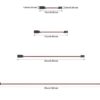
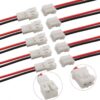
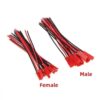
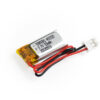
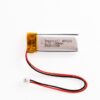
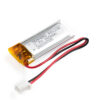
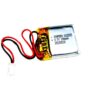
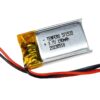
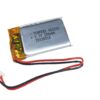
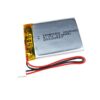
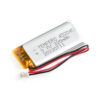
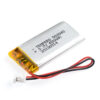
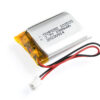
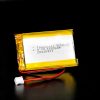
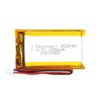
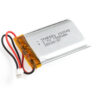
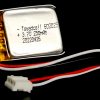
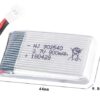
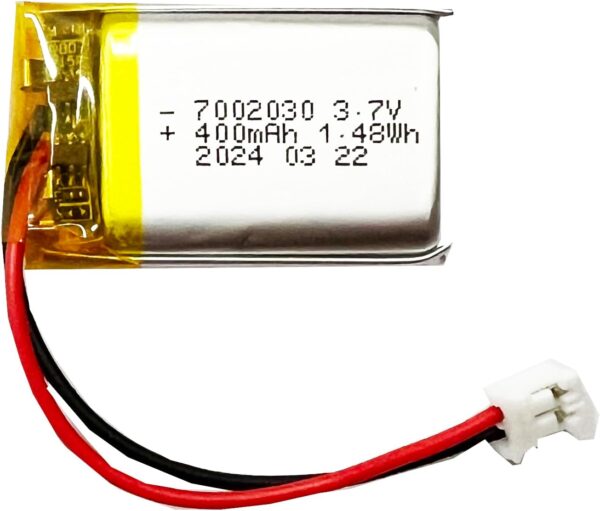
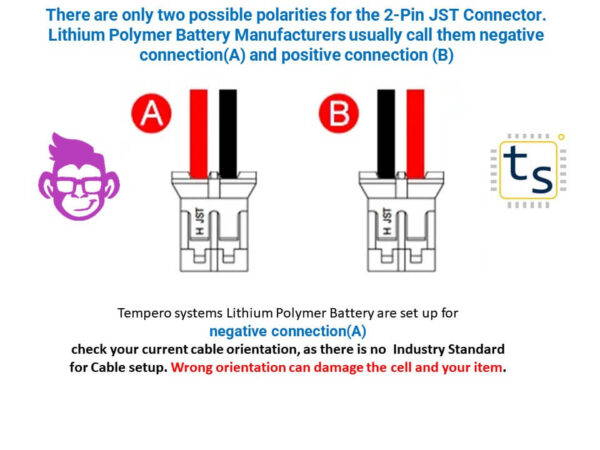
The batteries come pre-attached with a 2-pin JST-PH connector, as shown; please check your current cable orientation, as there is no Industry Standard for Cable setup. Wrong orientation can damage the cell and your Device.
$9.95
8 in stock
This item: 702030 Lithium ion polymer Battery LiPo 3.7V 400mAh
8 in stock
$9.95
$9.95
Description
Additional information
Applications
Support & Utility
Q & A
702030 Lithium-ion polymer battery LiPo 3.7V 400mAh Each cell outputs a nominal 3.7V. These batteries have fast charge times, reliably hold a charge, and have built-in safety circuitry. They are the best go-to option for any portable project.
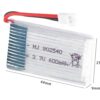
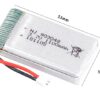
Model series Info 702030 6.9 = Thickness, 19.9= Width, 31.7= length + or -5%
Lithium-ion polymer (lipo) batteries are thin, light, and powerful. When ultimately charged, they output 4.2V to 3.7V. This battery has a capacity of 400 mAh, for a total of about 1.48 Wh. If you need a larger (or smaller!) battery, we have an extensive range of Lithium-ion polymer batteries.
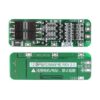
The protection circuitry keeps the battery voltage from going too high (overcharging) or too low (overdischarging), so the battery will cut out when completely dead at 3.0V. It will also protect against output shorts. Even with this protection, you must use only a LiPo constant-voltage/current charger to recharge them at 0.5C or less.
Tempero Systems suggests charging at 0.5 °C or lower, which is 180 mA max for this battery. Like most lipos, these batteries do not have built-in thermistors.
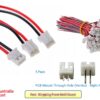
The batteries come pre-attached with a 2-pin JST-PH connector and include the necessary protection circuitry. The JST-PH connector has 2.0mm spacing between its pins.
Check that the connector (polarised type) matches the polarity of your equipment! There is no standard for the polarity of LiPo batteries with a JST-PH connector. We used the most common polarity, but your equipment may be different! If it does not match, it is easy to change the connector polarity.
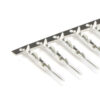
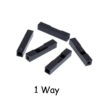
Use a thin-blade screwdriver or similar tool to press down on the small latch securing each crimp socket in the housing, then swap them. Ensure they do NOT touch each other.
Note: This battery is NOT suitable for R.C. cars, planes, drones, or other devices that require high power (current); these require a high-rate battery with a continuous discharge rate of 5C, 10C, 15C, 20C, 25C, 30C, 40C, or 50C or higher.
Specifications: |
Usage & Precaution:Lithium-ion and lithium polymer cells are powerful batteries; you should take extreme care when using them. If exposed to abusive conditions, they may get hot, explode, or ignite and cause serious injury. Unfortunately, we can not replace batteries damaged by non-compliant chargers or equipment. Do not
Additional safety notes: Do not use a NiMH/NiCad/lead-acid charger! Also, never charge or use unattended. Always inspect batteries and surrounding circuitry constantly for damage, loose wiring, or the possibility of short circuits. As with all Lithium-ion polymer batteries and any power source, they should be used by experts who are comfortable working with power supplies. |
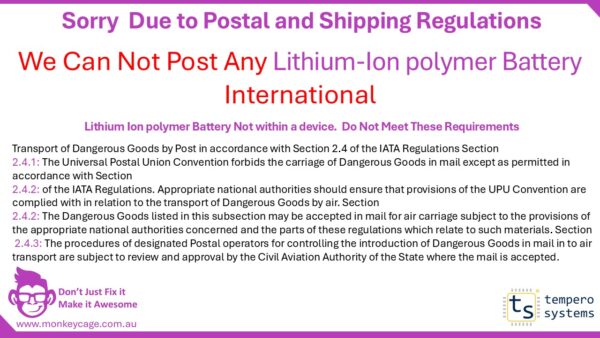
Sorry, Due to Postal and Shipping Regulations |
We Can Not Post Any Lithium-Ion polymer Battery internationally
|
Package Includes: |
|
 |
Check out our Clearance and on-sale items.
Development Resources: Demo Codes, Schematics, Datasheets, Etc |
 |
Hackaday serves up Fresh Hacks Every Day from around the Internet. |
 |
Instructables is a community for people who enjoy making things. Explore, share, and do your next project with us! |
 |
Where the world builds software |
 |
Raspberry Pi Foundation: What would you like to make today? |
 |
Arduino’s mission is to enable anyone to enhance their lives through accessible electronics and digital technologies. |
 |
Wikipedia is a free online Encyclopedia created and edited by volunteers worldwide and hosted by the Wikimedia Foundation. |
| Notes: |
|
| Weight | 0.010 kg |
|---|---|
| Dimensions | 4 × 3 × .7 cm |
Product Applications
Q & A
Ask a question
There are no questions yet